
Cesarean Section
A cesarean section (C-section) is the surgical delivery of a baby through incisions in the mother’s abdominal wall and uterus.
C-sections can help women who are at risk for problems avoid dangerous delivery-room situations and can be a lifesaver in an emergency.
C-sections are done by obstetricians (doctors who care for pregnant women before, during, and after birth) and some family physicians. Midwives cannot perform C-sections.
Some C-sections are scheduled if the doctor knows that a vaginal birth would be risky. A Gynecologist may schedule one if:
- The baby is in breech (feet- or bottom-first) or transverse (sideways) position in the womb
- The baby has certain birth defects
- The mother has problems with the placenta, such as placenta previa (when the placenta sits too low in the uterus and covers the cervix)
- The mother has a medical condition that could make a vaginal delivery risky for herself or the baby (such as HIV with a high viral load or an active case of genital herpes)
- Some multiple pregnancies
- The mother previously had surgery on her uterus or an earlier C-section (although many such women can safely have a vaginal birth after a C-section, called a VBAC)
Reasons for a C-section may include
- Health problems in the mother
- The mother carrying more than one baby
- The size or position of the baby
- The baby’s health is in danger
- Labor is not moving along as it should
The surgery is relatively safe for mother and baby. Still, it is major surgery and carries risks. It also takes longer to recover from a C-section than from vaginal birth. It can raise the risk of having difficulties with future pregnancies. Some women may have problems attempting a vaginal birth later. Still, many women are able to have a vaginal birth after cesarean (VBAC).
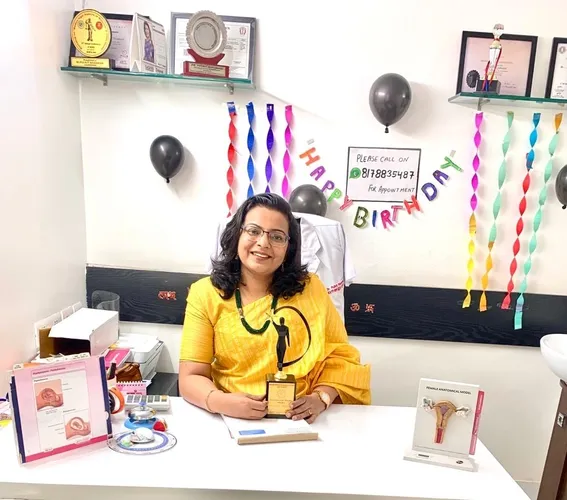
Dr. Pulkit Nandwani
Obstetrics & Gynaecology
MBBS, MD / MS – Obstetrics & Gynaecology, MRCOG(UK)
Diploma In Minimal Access Surgery & Gynaecology Endoscopy